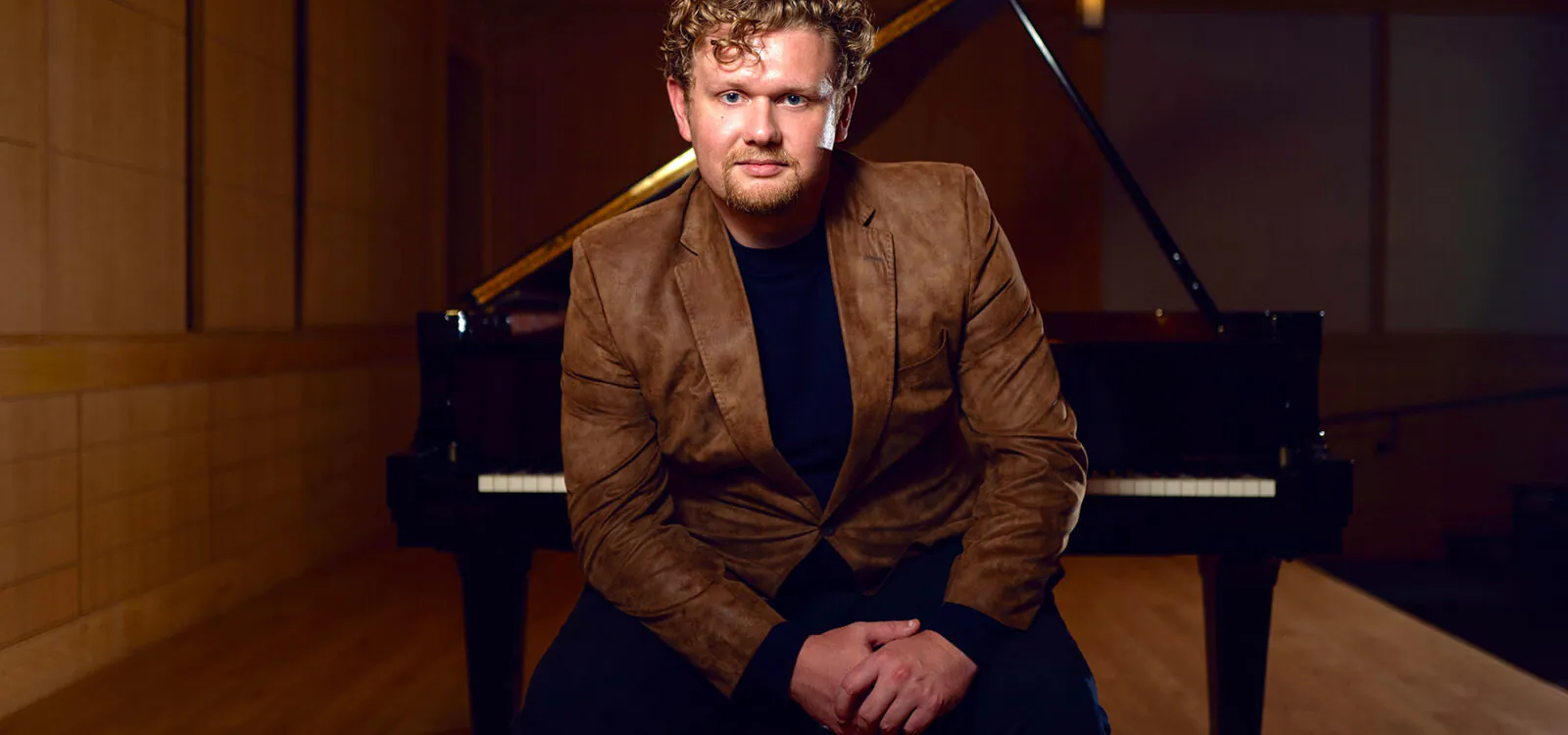
Florida State University College of Music alumnus Devin Eatmon (BM ’18, MM ’20) has etched his name into the history books. The talented tenor has won first prize at the prestigious Wagner Stimmen Competition 2026 in Bayreuth, Germany, marking a watershed moment as the first tenor to take home the top honor in the competition’s storied history.
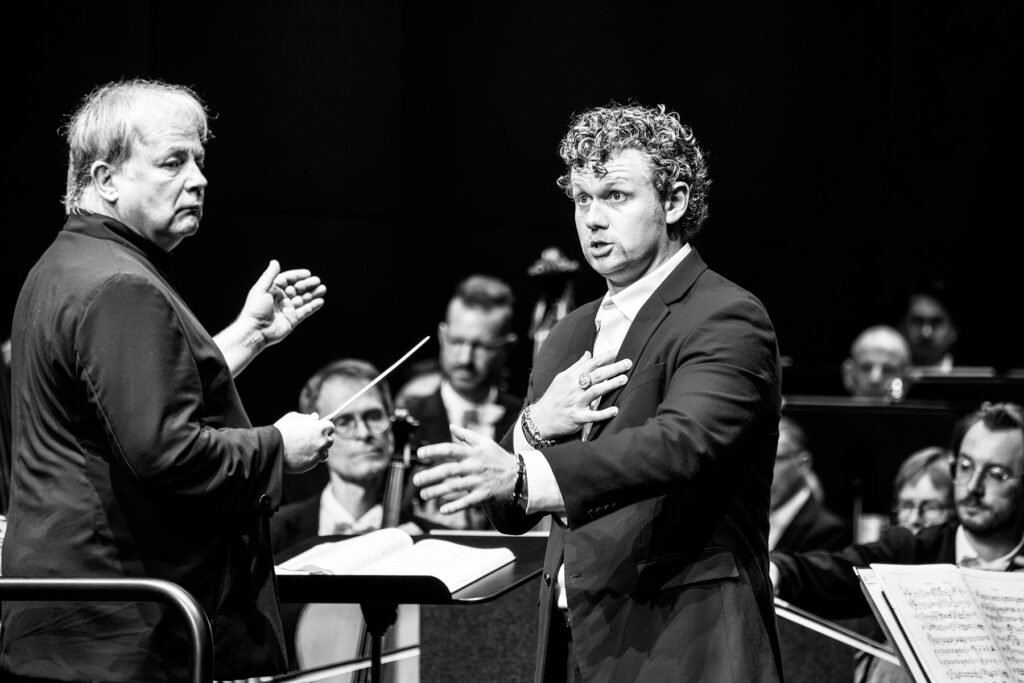
One of 278 applicants representing 39 nations, Eatmon advanced through rigorous rounds to secure a spot in the live public final on August 11, 2026. Held in the Great Hall of the Friedrichsforum, the final program consisted exclusively of excerpts from works by Richard Wagner, performed under the masterful direction of Axel Kober with members of the legendary Bayreuth Festival Orchestra.
(Parsifal)
For Eatmon, the life-changing moment his name echoed through the hall still feels delightfully surreal. “Honestly, what went through my mind was, ‘Did they just say my name?!?'” he recalls with a laugh. “I believe I even pointed at myself asking for verification. It was very funny, actually.”
Earning first prize as a tenor in a major Wagnerian competition is a rare and monumental achievement. Held once every three years, the Wagner Stimmen Competition has taken place only 10 times since its establishment in 1991, with finalists and winners predominantly drawn from sopranos, mezzo-sopranos, baritones, and basses. While a few tenors had previously reached the finals over the decades, none had ever placed—let alone captured first prize.
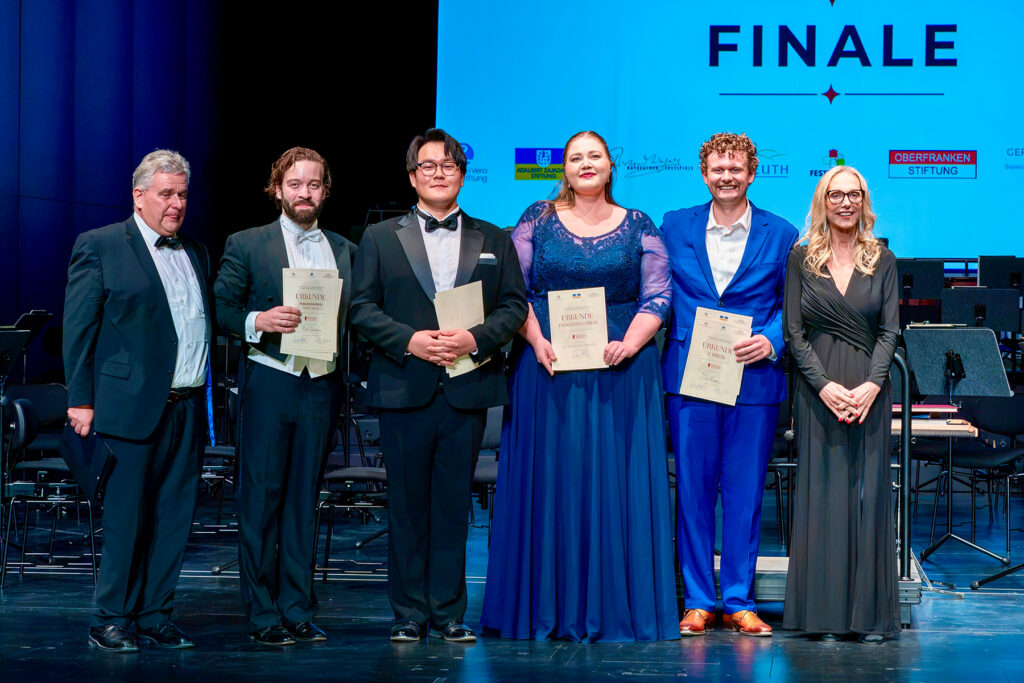
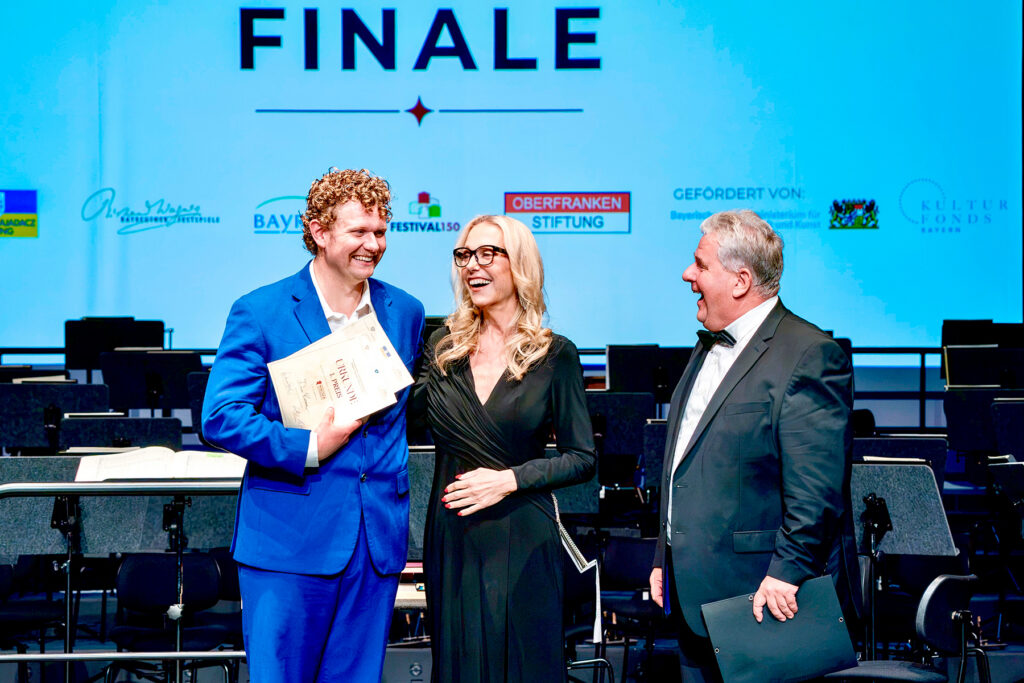
Shown above: From left to right: Peter Leonhardt, Chairman of the Board for the Richard-Wagner-Verband Bayreuth e.V. poses on stage with competition winners Carl Rumstadt (Audience Prize), Seokjun Kim (Wolfgang Wagner 2nd Prize), and Cecilia Lund Tomter, with Katharina Wagner, Artistic Director and Managing Director of the Bayreuth Festival; Eatmon with Katharina Wagner and Peter Leonhardt.
“In general, what we do as tenors is the most unnatural based on the human anatomy and we live our lives in the most demanding part of our ranges at all times,” Eatmon explains. “With my voice type, the technical demands are so great that I have about one percent wiggle room where I can get off track and still sing well. This sounds like an exaggeration, but the fact of the matter is that if I’m off more than one percent, the results are simply unacceptable to a panel of expert judges.”
“Wagnerian singers are very rare,” agrees Eatmon’s former instructor, David Okerlund, Professor of Voice and Director of Graduate Voice Research and Pedagogy at the College of Music. “In order to be invited to participate in the competition these singers must have a special quality of voice, a riveting presence, and strong vocal projection. Because of the difficulty of Wagner’s music and its demands, a singer’s musicianship must be perfect and their vocal technique rock solid. Lastly, one’s German must be impeccable.”
Despite the daunting standards of the Germanic repertoire, Eatmon found robust support while preparing in Europe. He coached extensively with at least six repertoire coaches at the Vienna State Opera, including Jendrik Springer, a long-time member of the Bayreuth Festival who served as head of musical studies (Studienleitung) for both Parsifal and Der Ring des Nibelungen this season. Because Eatmon’s competition arias came directly from those two works, Springer’s guidance proved invaluable.
For Eatmon, the pinnacle of the experience was performing alongside the Bayreuth Festival Orchestra and conductor Axel Kober. “Words cannot describe the beauty of how these 90 instrumentalists played. They are all geniuses,” Eatmon says. “Everything I did stylistically, communicatively, and interpretively they matched on the spot. Axel is a very clear conductor with a strong level of empathy, so it felt like we had a great musical connection.”
How Did I Get Here?
Eatmon’s path to the operatic summit took an unexpected, winding route. Growing up in Central Florida, his earliest ambition was competitive golf, but the solitary, hardened environment of competitive golf never felt entirely right for him. He wanted to do something that actively inspired others.
That calling found him in high school, when his choir teacher, Robbie Riddle, recognized his natural talent for singing, comedy, and acting, and encouraged him to explore classical voice. A pivotal moment for Eatmon arrived when his choir performed Joshua Schenk’s choral piece, Musica Animam Tangens (“Music Touching”):
Music touching
Exhaling its breathless oceans of life
Currents that free hearts giving love to
All that open the sounds that fill
The mountain of my existence
And overflow my soul
to touch God.
“This piece unlocked within me an empathy that was much more than pure talent for an art form,” Eatmon reflects. “At its most basic, music is simply communication, and it spoke to me. I thought of how many people out there just needed to be heard, or even just needed to listen, in order to feel at ease… That’s when I decided to become a professional singer.”
After earning his Associate of Arts degree at the College of Central Florida in Ocala, Eatmon aimed high with his applications, targeting Juilliard, the Manhattan School of Music – and Florida State University.
“I had heard it [FSU] was one of the best colleges of music in the country,” explains Eatmon.
“I’m so grateful that I didn’t attend anywhere else. Without a doubt, it was the best decision I could have made,” says Eatmon.
“FSU gave me a talent-based scholarship to attend, which they then raised after my first year, plenty of role experience, amazing language courses, and my life-long voice teacher, David Okerlund. I am incredibly proud to claim Florida State as my alma mater.”
At FSU, Eatmon laid a formidable foundation. On stage, he built crucial performance experience starring in La Bohème (Rodolfo), Of Mice and Men (Curley), Prince of Players (George Villiers), and his first German romantic role as Edgar Aubrey in Heinrich Marschner’s Der Vampyr.
Off stage, he dove into essential language courses and music theory, including an introduction to Schenkerian Analysis that proved immensely useful for phrasing. Crucially, Eatmon spent nearly two years working strictly on foundational vocal exercises with Okerlund before tackling heavy repertoire.
“Devin is one of those rare students who is a crazy nerd for all things opera and is one of the most driven students I’ve ever taught,” recalls Okerlund. “He was constantly practicing in practice rooms, stairwells, bathrooms, and even outside on the lawn of the College of Music.”
“Devin grew tremendously throughout his bachelor’s and master’s degrees in Vocal Performance,” says Okerlund. “Following graduation, he was immediately accepted into young artist programs and methodically began working his way through the training system that exists in the United States. That dedication and drive culminated with his appointment to the Resident Arts Program at the Staatsoper in Vienna.”
“Winning this competition is the absolute pinnacle for a voice like Devin’s,” explains Okerlund. “Professionally, in my opinion, it is the equivalent of winning the Cardiff Singer of the World two times over. Typically, when you win this competition, your career explodes.”
“I couldn’t be more proud of him.”
“When I started studying with Professor Okerlund, I had so many technical issues that needed to be addressed,” Eatmon explains. “He always saw the potential of my instrument and knew that it was special… His technical knowledge and knowledge regarding the facts of the human anatomy and physiology are how I am able to sing the way I sing today.”
Eatmon also credits a wealth of FSU faculty members with shaping his artistic identity, including Douglas Fisher, Matthew Lata, Timothy Hoekmann, Valerie M. Trujillo, and André Thomas.
What Comes Next?
Now building a burgeoning career in Europe, Eatmon recently transitioned into an emerging artist residency at the Vienna State Opera. Navigating the jump from a young artist program to an ensemble-level professional environment has brought a steep learning curve, requiring him to negotiate on his own behalf, stand firm in his artistic identity, and embrace the full weight of self-representation.
Looking ahead, Eatmon is thrilled to explore the Germanic repertoire further. He is particularly excited to debut the role of Narraboth in Salome this season at the Vienna State Opera, and looks forward to one day taking on Parsifal, Siegmund (Die Walküre), and Max (Der Freischütz).
Reflecting on his journey from Tallahassee to the stages of Bayreuth, Eatmon offers grounded, hard-earned advice for current music students and aspiring opera professionals.
“You really need to be in love with this art form and at times healthily obsessed in order to keep going because it’s a very hard lifestyle and career path,” Eatmon advises. “You CAN achieve your goals and even surpass them, just be relentless in mastering your technique, record and listen critically to yourself, ask the big questions, and above all, believe in yourself and never give up. Go Noles!”